
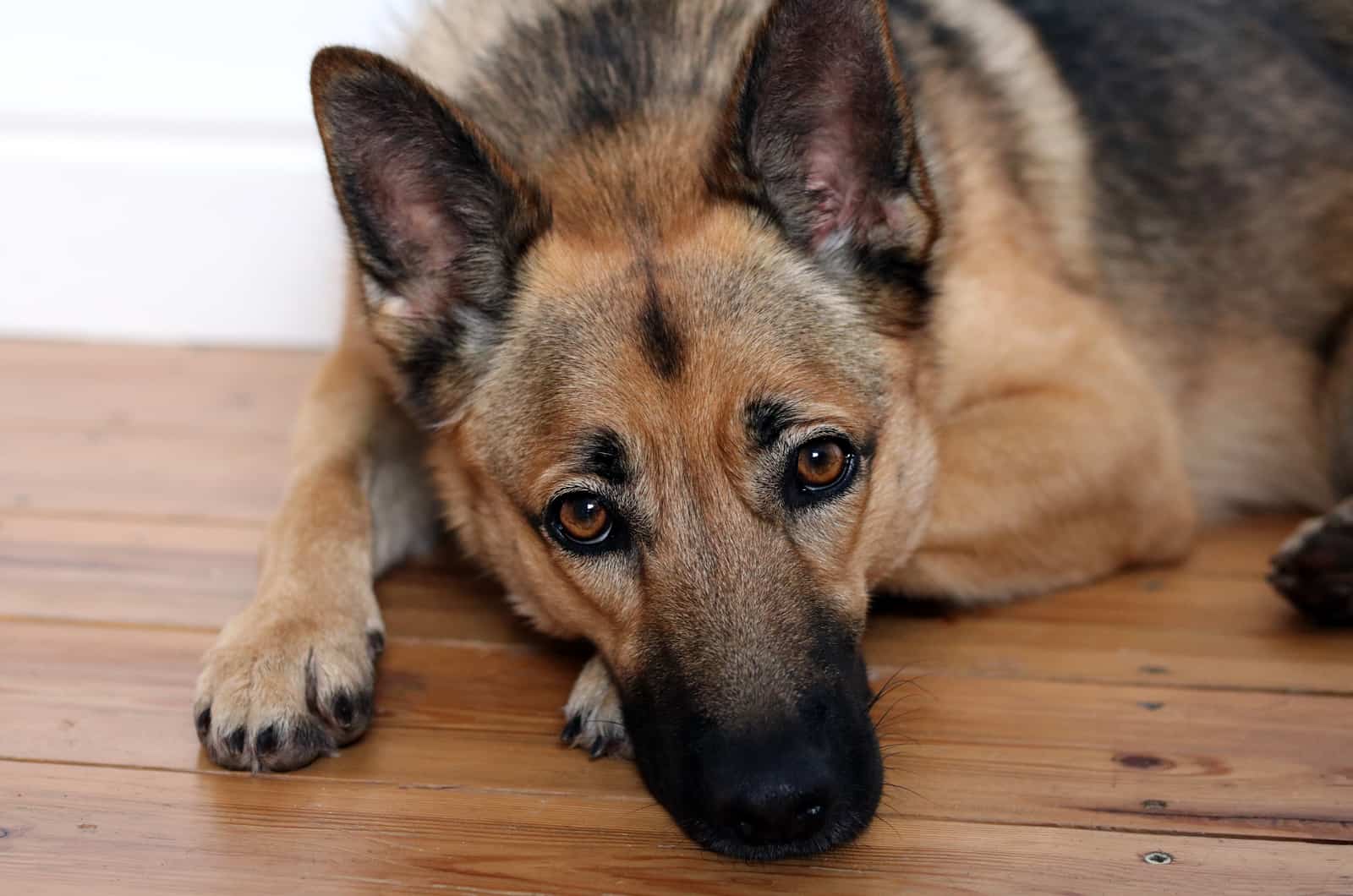
When my friend noticed her German Shepherd's eyes rolling back, she panicked, fearing the worst. I completely understood her reaction, but I needed to help her stay calm so she could handle the situation properly.
7 Common Causes for German Shepherd’s Eyes Rolling Back
She eventually took a deep breath and called her vet, scheduling an appointment as quickly as possible. This is the best step for any dog owner to take when they see something unusual in their pet's behavior.
There are various reasons why a dog, like a German Shepherd or any other breed, might have their eyes rolling back. Even though it looks frightening, it isn’t always something severe, but that doesn’t rule out serious conditions either.
Here are some of the medical issues and other possibilities that could cause your dog's eyes to roll back:
#1 Eye Injury
Sometimes, an eye injury from a small object or even a serious trauma could make your dog's eyes roll back.
It might also be an issue with the third eyelid. If the third eyelid comes up over the eye while it’s open, it can give the impression that the eye is rolling back.
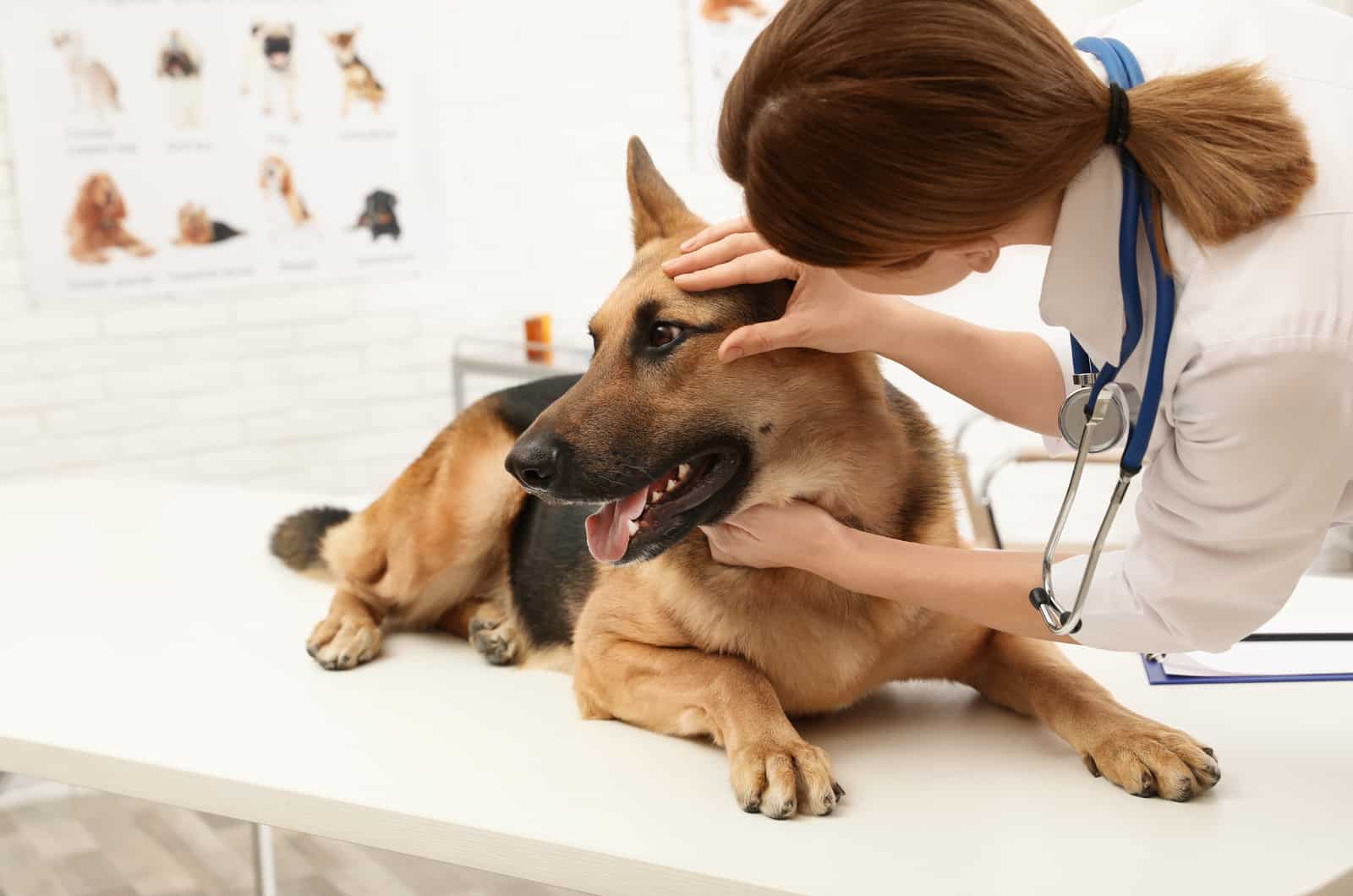
This usually happens because of some discomfort or pain near the eye. Problems like conjunctivitis or a small scratch can trigger the third eyelid, signaling to us that there’s something wrong and that professional help is needed.
#2 Seizures
Seizures are quite frightening, especially if it’s your first time seeing one. They can happen for several reasons, such as epilepsy, head injuries, toxins, or other health issues.
When a seizure happens, your dog might become confused and act oddly. They could start shaking uncontrollably, become stiff, drool, lose consciousness, or even collapse suddenly.
Silent seizures are another type that can be tricky to notice. They sometimes only affect the eyes, causing them to roll back, making it easy for them to go unnoticed unless you know the signs.
If you ever see your dog having a seizure, stay calm and give them space. They may not recognize you in their confusion and could react defensively. [1]Let the seizure pass and then take them to the vet as soon as possible.
#3 Stroke
One of the most serious health problems that can cause your dog’s eyes to roll back is a stroke.
Strokes occur when there’s a sudden disruption of blood flow to the brain. Regardless of the type, it’s a severe condition that can lead to seizures, balance issues, blindness, and abnormal eye movements.
Although strokes are hard to predict, quick action is essential to minimize any damage. Taking your dog to the vet immediately is crucial.
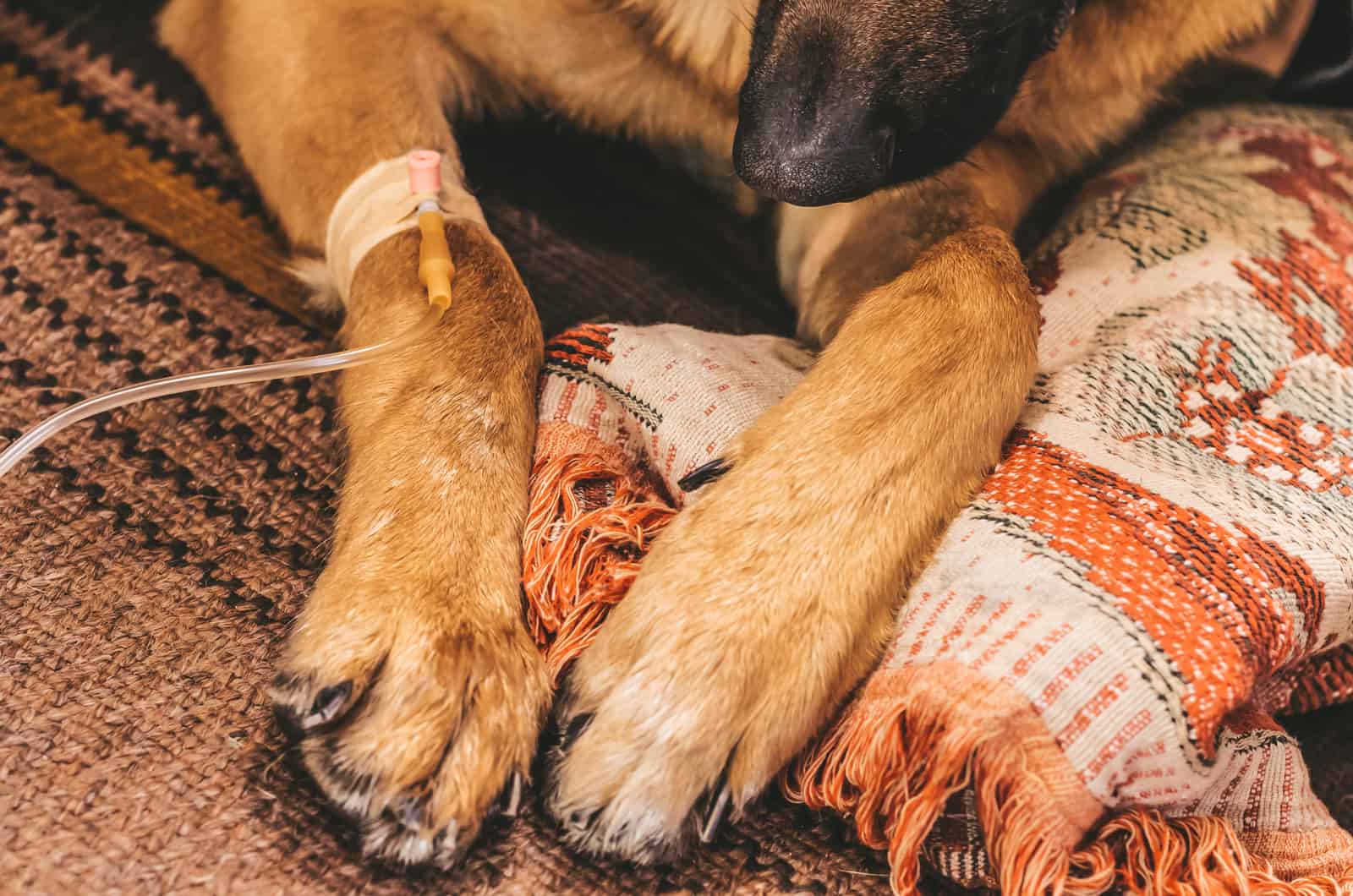
According to research by Simon R. Platt, animals have remarkable recovery rates after strokes, possibly even better than humans, due to their less developed pyramidal system. [1]
#4 Nystagmus
Nystagmus is a condition that causes uncontrolled eye movements in dogs. It’s often linked to problems within the sensory system, but it could also be due to aging or birth defects.
If you think your dog might have nystagmus, check for other signs like head tilting or circling. Dogs often tilt their heads to adjust their vision.
Nystagmus can be present from birth and is fairly common, but it might also appear suddenly at any age.
If it happens suddenly, take your dog to the vet to rule out any neurological issues that could be causing these symptoms in your furry friend!
#5 Side-Effects To Medication
If your dog is on medication, one possible side effect could be their eyes rolling back. This often happens with painkillers or tranquilizers.
These drugs create a deep sense of relaxation, which may make it hard for your dog to control their movements. Given how sensitive eyes are, they may start rolling back involuntarily.
It’s important to research any medication your dog is taking. This helps you understand what to expect and prepares you for side effects like these.
#6 Cherry Eye
Cherry eye is a condition where the gland of the third eyelid becomes displaced, leading to a red mass appearing in the corner of the eye. This causes discomfort, and the eye might roll back as a result.
The cause of cherry eye isn’t completely clear, but it can happen out of the blue or be triggered by trauma, inflammation, or even genetics.
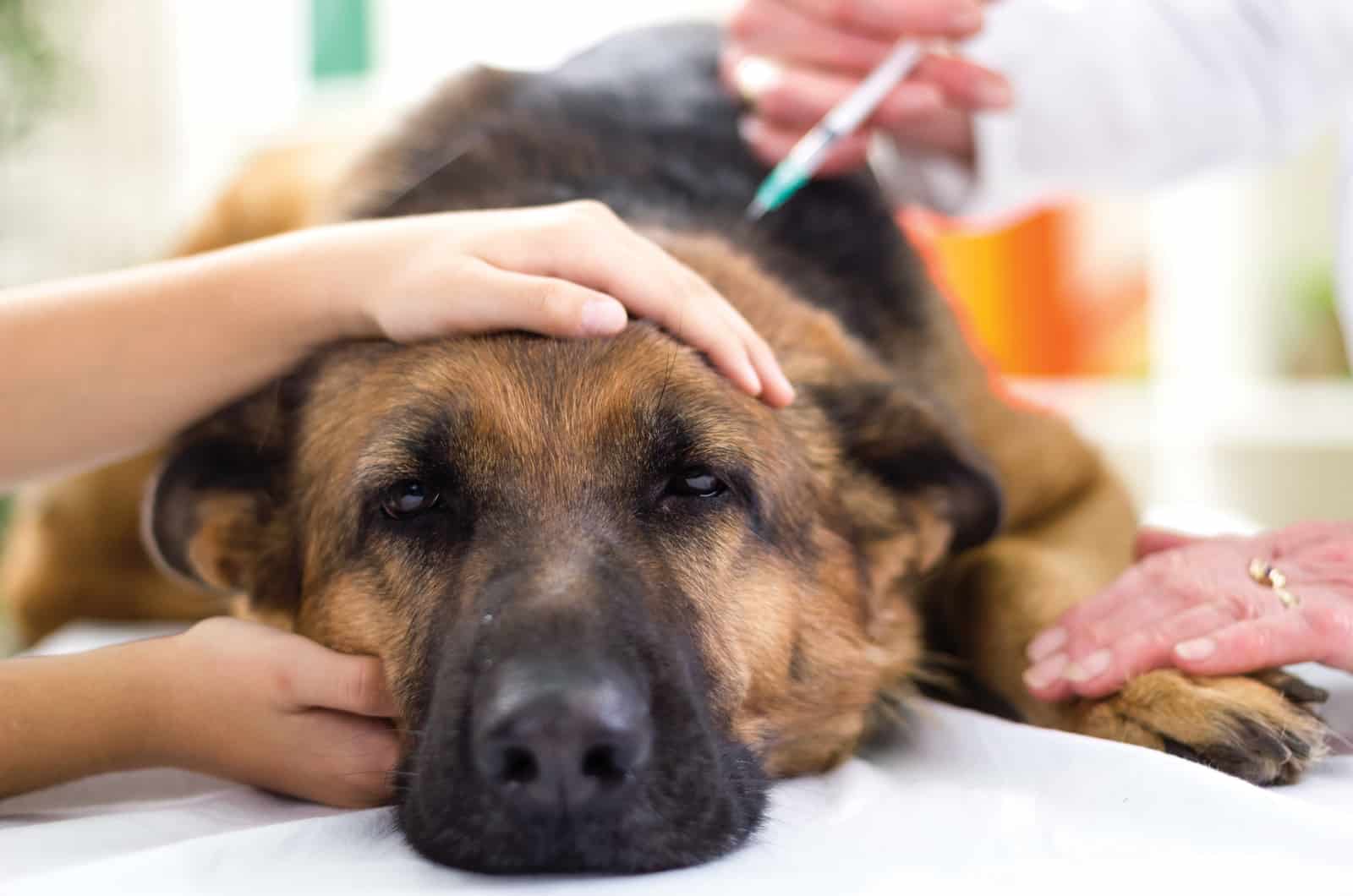
Treatment usually includes medication and massage techniques to reposition the gland. This method has proven to be quite effective. [2]
If you notice signs of cherry eye, take your dog to the vet to prevent any further complications like chronic dry eye or conjunctivitis.
#7 Red Alarm
Sometimes, your dog’s eyes rolling back might be a warning sign of a serious health issue.
It could indicate the presence of a tumor. Tumors can impact the neurological system, linking back to conditions like nystagmus.
Vestibular disease might also cause this symptom. Even though it mainly affects your dog’s balance, making it hard for them to walk straight, one of its symptoms is involuntary eye movement.
Strabismus, often hereditary, can cause the eyes to move in different directions. It may also be due to tumors, head injuries, or vestibular disease.
Cysts can lead to unusual eye movements, affecting eye structures or causing discomfort.
To Sum Up...
Learning about all the potential causes for these symptoms can help you be better prepared if something happens.
Even though this information could have been helpful for my friend, the most important thing was getting her German Shepherd to the vet right away. The cause could be completely different from what I listed, and his treatment plan would be specific to his condition.
Now, he’s in great health, and his owner feels ready to take action if it ever happens again. Let’s hope it doesn’t come to that!
References:
- Platt, S. R., & Garosi, L. (2003). Canine cerebrovascular disease: Do dogs have strokes?, Journal of the American Animal Hospital Association, 39(4), 337–342. DOI
- A. Neeraj, Chaudhary R. N., Pandey A. K., Potliya S., Singh K., Surgical Management of Cherry Eye in Dogs. Indian Journals (2014).
More In Health
Health
 7 Essential Questions To Ask Your Vet Before Your Dog Goes Under Anesthesia
When your dog needs a medical procedure that involves anesthesia, it’s important to make sure...
Oct 27, 2024
Health
 5 Delicious and Safe Alternatives to Water for Your Dog
Dogs are smart creatures, and they know that staying hydrated is key to a happy life! But sometimes,...
Oct 27, 2024
Health
 How To Treat And Prevent Hot Spots In Dogs
Hot spots are a common skin issue for dogs, especially during the warm summer months.
Oct 27, 2024
Health
 How Much Sleep Does Your Dog Really Need Each Day?
Dogs absolutely love taking naps. It's one of their favorite pastimes. On average, they spend n...
Oct 27, 2024
Health
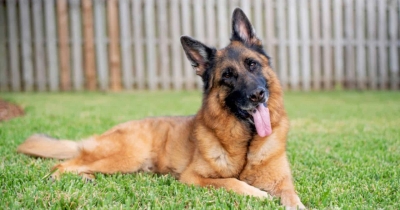 7 Common Causes for German Shepherd’s Eyes Rolling Back
When my friend noticed her German Shepherd's eyes rolling back, she panicked, fearing the worst...
Oct 27, 2024
Health
 How Long Do Dogs Typically Live? Plus, Tips to Extend Their Lifespan
We all wish our furry friends could stay with us forever, but sadly, their lifespans are shorter tha...
Oct 18, 2024
Health
 How Different Types Of Music Can Calm Or Stress Your Dog
One of the biggest concerns for most dog owners is dealing with stress, anxiety, or fear in their pe...
Oct 18, 2024
Health
 5 Surprising Reasons Why Your Dog Sploots
There are so many things our furry companions do that make us think they are the cutest creatures ev...
Oct 18, 2024
Health
 6 Common Habits That Could Be Putting Your Dog At Risk
There's no doubt that every dog owner absolutely adores their furry companion. However, there a...
Oct 17, 2024
Health
 5 Simple And Quick Tricks To Teach Your Dog
Every dog owner knows that once you adopt a sweet little pupper, there are certain things you must d...
Oct 16, 2024