
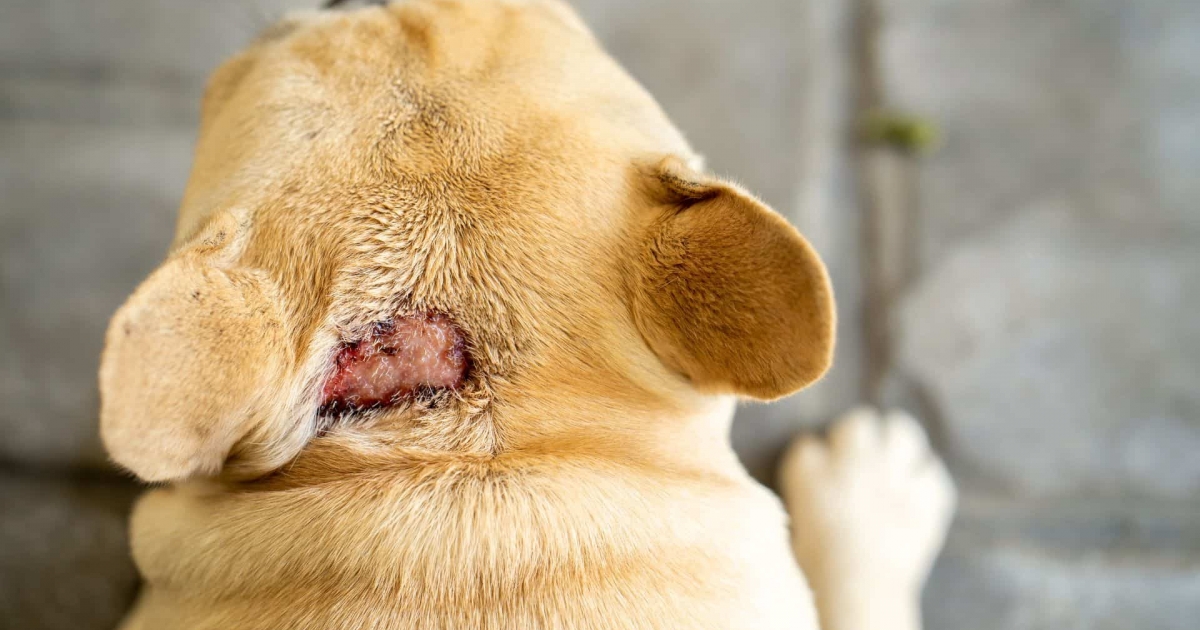
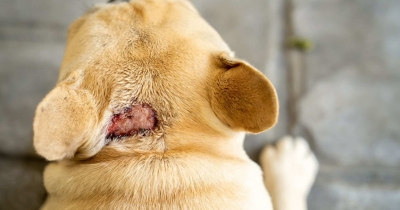
Hot spots are a common skin issue for dogs, especially during the warm summer months.
Many dogs experience this, so while it's not a reason for major concern, there are steps you can take to prevent these spots from recurring frequently.
That’s what we’ll cover in this article.
How To Treat Hot Spots
Before we dive into prevention and treatment, let’s first explain what hot spots are. Also known as pyotraumatic dermatitis or acute moist dermatitis, these are inflamed, infected patches that develop on a dog's skin.[1]
So, what triggers them? The simplest explanation is excessive scratching. Dogs might scratch an itch to the point where it becomes red and starts bleeding, eventually forming a hot spot.
But what causes the itch? Unfortunately, there isn’t a single answer. Multiple factors could be at play.
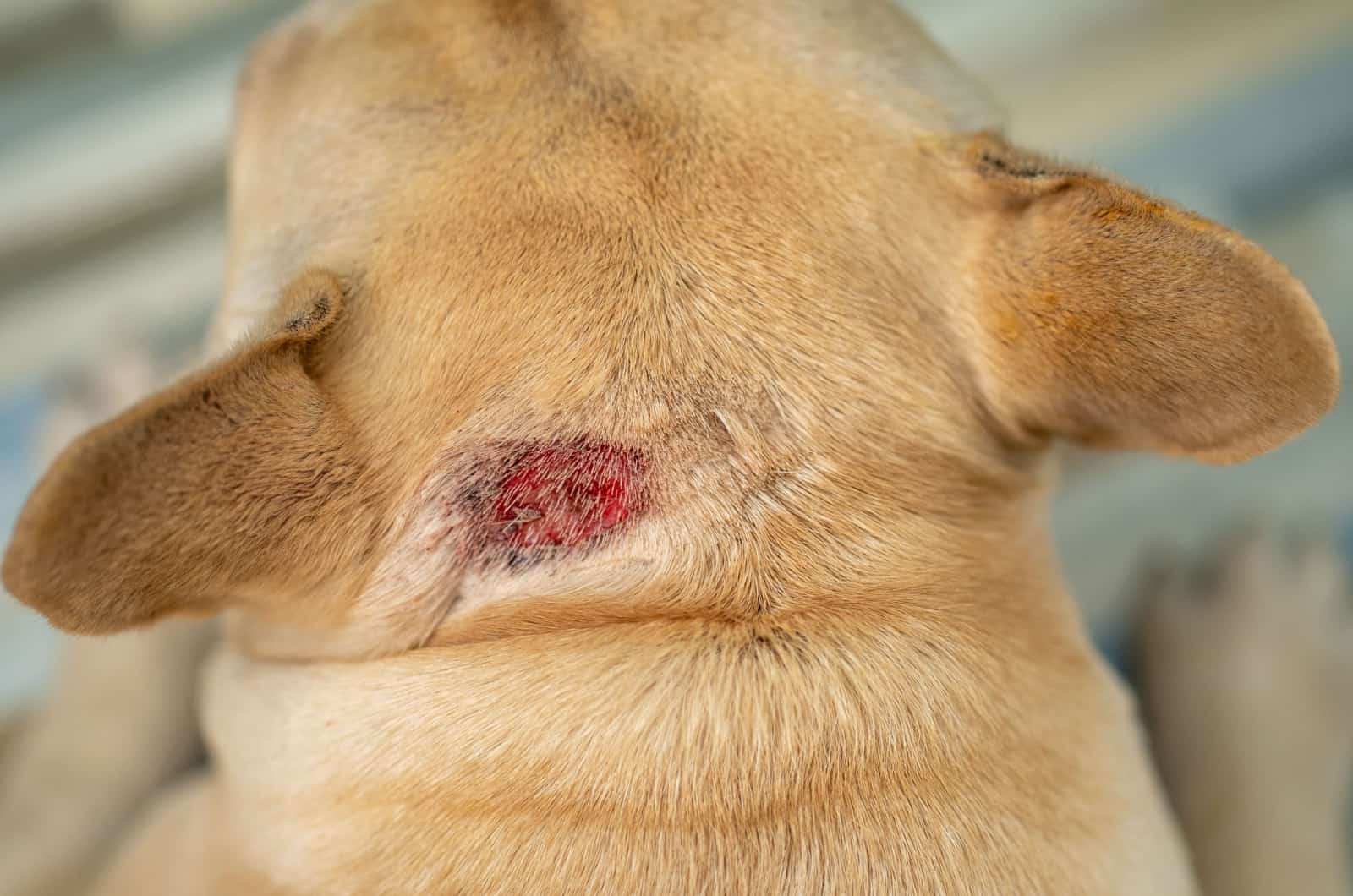
Itching in dogs is a widespread issue with many potential causes, including:
- Allergies
- Insect bites
- Pyoderma
- Ear infections
- Anxiety
- Boredom
- Parasites
- Orthopedic problems
- Anal gland inflammation
Thankfully, there are effective ways to manage and treat hot spots. The first step is to prevent your dog from further aggravating the affected skin.
Simple Remedies
Medications can help reduce the itching. Additionally, using an Elizabethan collar can prevent your dog from scratching constantly.
Another helpful approach is covering the hot spots. If the affected area is on the feet or neck, you can use clothing or a soft wrap as a barrier.
Anti-itch medications are also available, but it's important to use these with caution.
Consulting your local vet is the best course of action so they can recommend the right treatment.
Homemade Remedies
There are also home remedies that might help manage hot spots. However, these should only be used as temporary measures until your dog gets professional care.
One method is shaving the fur around the hot spot before it gets too severe. This prevents moisture buildup and allows the area to dry out, aiding in healing.
Another option is gently cleaning the wound using a soft sponge, cool water, and a dog-safe skin cleanser. Remember to be very gentle.

Proper Treatment
When it comes to actually treating hot spots, things can get a bit tricky. It’s not as simple as applying medicine and hoping it goes away.
The treatment often depends on the underlying cause. If the hot spot is due to boredom, specific medications might be prescribed to address that. If it's an ear infection, antibiotics may be needed. For allergies, desensitization therapy could be necessary.
In any case, consulting your vet first is the best approach. They will identify the root cause and suggest the appropriate treatment plan.
How to Prevent Hot Spots
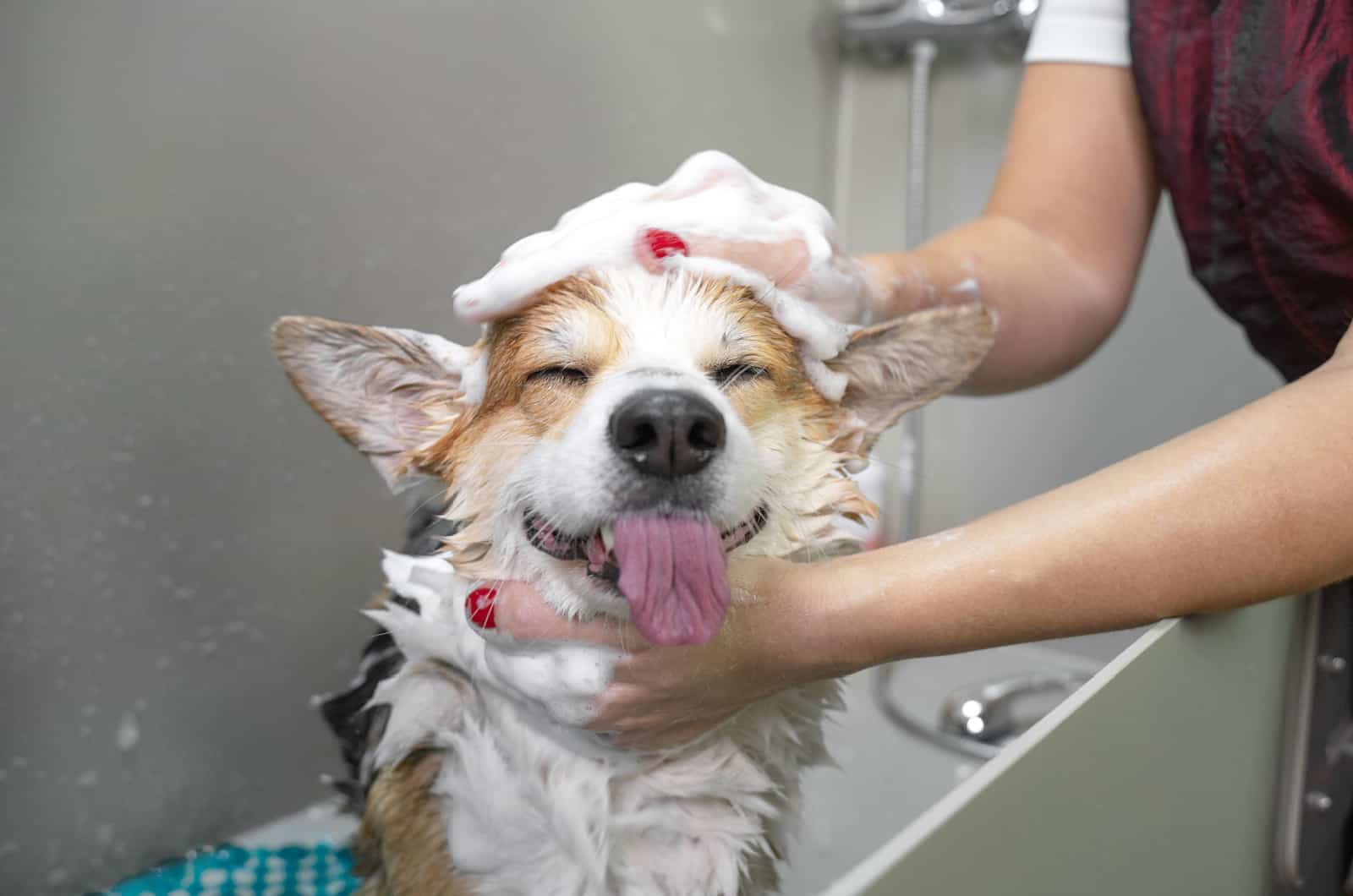
Preventing hot spots can be straightforward with a few steps. Regular grooming, bathing, and keeping up with flea prevention are essential practices that significantly lower the risk of hot spots.[2]
If your dog has known allergies, especially during summer, work with your vet to manage them effectively.
Hot spots are not something to worry about too much, and they are generally easy to treat.
Still, seeing your dog uncomfortable and scratching is never pleasant.
Always take the necessary steps to care for your dog’s skin and health to prevent these issues.
References:
[1] Holm, B. (2004, December). Picture This: Management of Canine Pyotraumatic Dermatitis (a.k.a., Hot Spot). National Library of Medicine.
[2] Racine, E. (2022, July 25). Treating and Preventing Hot Spots on Dogs. American Kennel Club.
More In Health
Health
 7 Essential Questions To Ask Your Vet Before Your Dog Goes Under Anesthesia
When your dog needs a medical procedure that involves anesthesia, it’s important to make sure...
Oct 27, 2024
Health
 5 Delicious and Safe Alternatives to Water for Your Dog
Dogs are smart creatures, and they know that staying hydrated is key to a happy life! But sometimes,...
Oct 27, 2024
Health
 How To Treat And Prevent Hot Spots In Dogs
Hot spots are a common skin issue for dogs, especially during the warm summer months.
Oct 27, 2024
Health
 How Much Sleep Does Your Dog Really Need Each Day?
Dogs absolutely love taking naps. It's one of their favorite pastimes. On average, they spend n...
Oct 27, 2024
Health
 7 Common Causes for German Shepherd’s Eyes Rolling Back
When my friend noticed her German Shepherd's eyes rolling back, she panicked, fearing the worst...
Oct 27, 2024
Health
 How Long Do Dogs Typically Live? Plus, Tips to Extend Their Lifespan
We all wish our furry friends could stay with us forever, but sadly, their lifespans are shorter tha...
Oct 18, 2024
Health
 How Different Types Of Music Can Calm Or Stress Your Dog
One of the biggest concerns for most dog owners is dealing with stress, anxiety, or fear in their pe...
Oct 18, 2024
Health
 5 Surprising Reasons Why Your Dog Sploots
There are so many things our furry companions do that make us think they are the cutest creatures ev...
Oct 18, 2024
Health
 6 Common Habits That Could Be Putting Your Dog At Risk
There's no doubt that every dog owner absolutely adores their furry companion. However, there a...
Oct 17, 2024
Health
 5 Simple And Quick Tricks To Teach Your Dog
Every dog owner knows that once you adopt a sweet little pupper, there are certain things you must d...
Oct 16, 2024